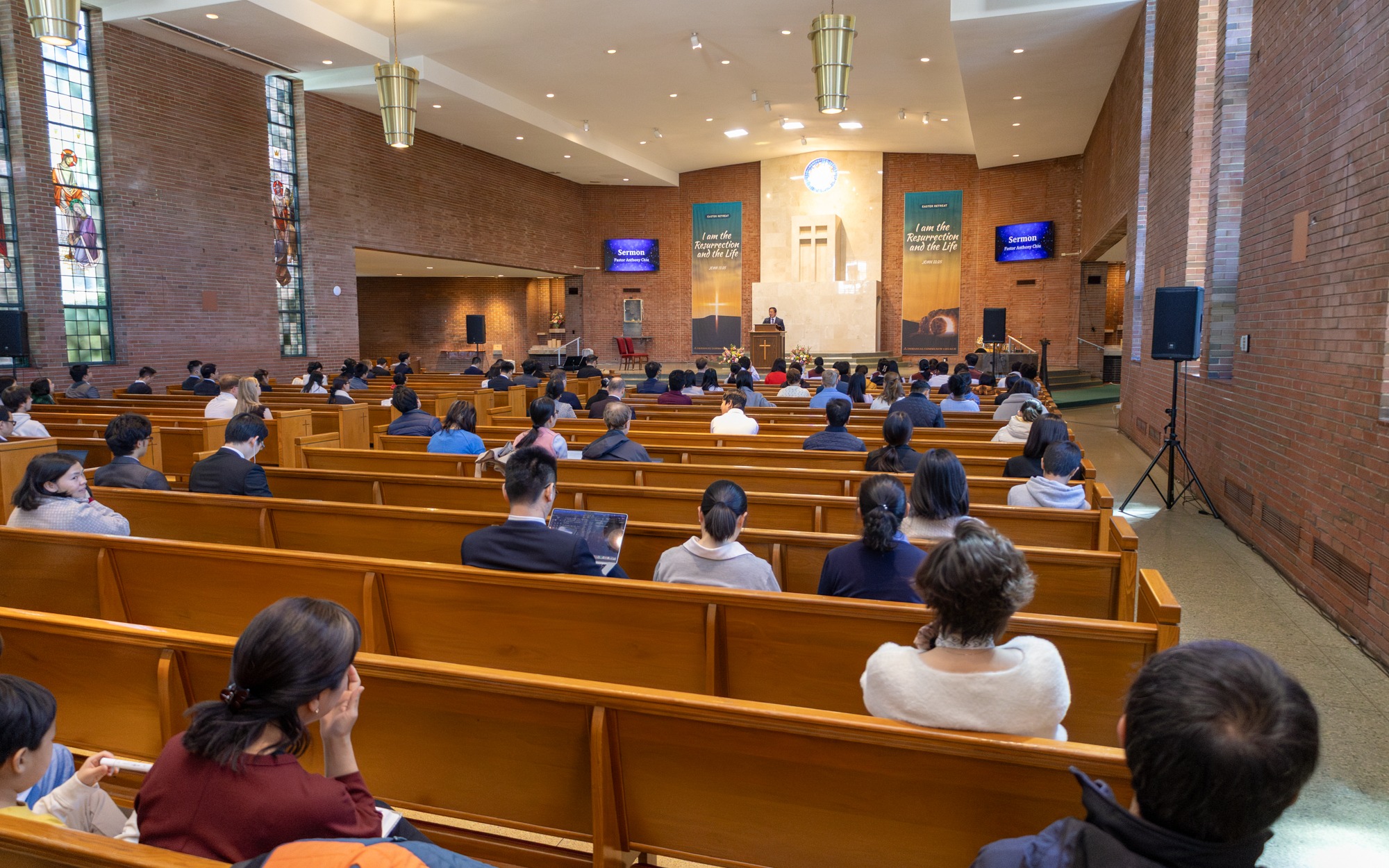
Sermon Manuscript
John 21 Restoration
Peter’s failure is met by the risen Lord’s restoring love and renewed calling: “Feed my sheep.”
Public Excerpt
Through his failure, his pain, and his restoration, Peter arrives at a new confession: “Lord, you know that I love you.” Before, he relied on his own confidence. Now, he removes all self-assurance. Standing once again before Jesus, Peter realizes that it is not his love that sustains the relationship. It is the Lord’s love for him.
To be fully known by the Lord is to be fully loved by Him. Only because He first loved us do we come to understand love and respond by loving Him in return.
You Know that I Love You (John 21:15–19)
Last week, we looked at the first part of John 21. After the resurrection, where do we find the disciples? They are back at the Sea of Galilee. There is still an atmosphere of defeat as they return to fishing and catch nothing. This reflects their condition before they first met Jesus, as seen in Luke 5.
Yet, when they encounter the risen Lord, everything changes again. Their emptiness turns into abundance. In the same way, our lives are transformed when we recognize the Lord again in faith.
Through the Word of God, we come to understand love. This love does not originate from within us, but is first revealed to us by the Lord Himself. As it is written, “Then I shall know fully, even as I have been fully known” (1 Cor. 13:12). To be fully known by the Lord is to be fully loved by Him. Only because He first loved us do we come to understand love and respond by loving Him in return.
As we continue in our faith journey, the Lord we once knew is revealed to us more deeply. Scripture continually shows us new aspects of who He is. In the same way, our understanding of love grows. In this next part of John 21, we see Peter coming to terms with his past—his denial of the Lord—and discovering the true source of the love that binds him to Christ.
Do You Truly Love Me More Than These? (John 21:15–17)
When the Lord asks, “Do you truly love me more than these?” what is He referring to? It could mean whether Peter loves Him more than the things of this world. But more likely, it is a direct reference to Peter’s earlier bold claim that he would never fall away, even if others did.
Matthew 26:33
Peter once declared with confidence that his love for the Lord was greater than that of others. Yet we know he failed. Even the one who stood as a leading disciple fell in the moment of testing. This reveals something important: the apostles themselves testified not by hiding their failures, but by exposing them—so that it would be clear that righteousness comes not from man, but from the Lord alone.
Peter must have been deeply tormented by his denial. Matthew 26:74–75 tells us how he wept bitterly when the rooster crowed, remembering the Lord’s words. His confidence collapsed in the face of trial. Before the cross, human courage proved to be nothing.
1 Corinthians 3:11–13
Paul teaches that every foundation is revealed when tested. Whether built with gold or straw, everything is exposed by fire. This fire represents the trials of life—especially the suffering connected to the cross. It reveals whether our faith rests on something lasting or something temporary.
Peter went through such a test and was found lacking. The cross humbled him and exposed his weakness so deeply that it must have been difficult for him even to stand before the Lord again.
Yet Jesus asks him three times, “Do you love me?” Each question mirrors Peter’s three denials. And with each response, the Lord restores him.
Peter is grieved the third time. This grief reflects something many of us have experienced. The Lord strengthens us when we are weak, but He also humbles us when we think we are strong. Why? So that we may step away from a weak and unstable foundation and stand on one that is truly unshakable. Unless we realize that our foundation must change, we will never seek a better one.
What, then, is the new foundation Peter discovered?
Through his failure, his pain, and his restoration, Peter arrives at a new confession: “Lord, you know that I love you.”
This is very different from his earlier bold claims. Before, he relied on his own confidence. Now, he removes all self-assurance. He no longer tries to prove his love with strong words. Instead, he entrusts everything to the Lord’s knowledge of him.
This is a deeper place—beyond words. It reflects the entire journey of Peter: his devotion in following Jesus, his failure in denying Him, and his restoration by the risen Lord.
Standing once again before Jesus, Peter realizes that it is not his love that sustains the relationship. It is the Lord’s love for him. Despite his failure, the Lord held onto him, called him again, and restored him. This is why Peter can stand again.
Paul expresses the same truth in Galatians 2:20—that it is no longer he who lives, but Christ who lives in him. The strength and love of a believer do not come from within, but from Christ.
1 John 4:10
It is not that we loved the Lord first, but that He first loved us. And it is this love that compels us to love Him in return.
Peter’s confession reflects this realization. His love is no longer based on his own ability or devotion, but on the Lord’s love that came first, knew him fully, and never let him go.
Feed My Lambs (John 21:15–16)
After each confession of love, Peter is not simply affirmed—he is given a command. The Lord says to him, “Feed my sheep.”
This is very important. The Lord does not stop at, “Yes, I know you love me.” Instead, He directs Peter immediately to action. Through this exchange, the Lord reveals a profound truth: loving Him is not expressed merely in words or emotion, but in what we do—specifically, in how we care for His people. What does it mean to love the Lord? It means to feed His sheep.
This command carries deep significance for the church today. The church is not only called to proclaim the gospel, but also to nurture, guide, and care for those who belong to Him. These two responsibilities—missions and shepherding—must go together. When they are together, the church becomes strong, established, and faithful before the Lord.
This is not something that belongs to one generation alone. If we look back, many who are now pastors and missionaries first encountered the Lord when they were young. What began as a simple response to the Lord’s call became a lifelong offering.
The history of mission is not just a story of the past—it continues even now. Those who once heard the question, “Do you love me?” did not answer only with their words. They answered with their lives. And how did they show it? By feeding the Lord’s lambs.
So what about us today? To love the Lord means that our entire life becomes an expression of that love. Everything we do—our work, our service, our relationships—becomes a way of caring for His sheep. Whether through proclaiming the Word, building fellowship, or serving others, our lives are shaped by this one command: “Feed my sheep.”
From the resurrection until the Lord returns, this mission does not change. It is missions, evangelism, worship, the sacraments, and shepherding. These are not separate things. They are all expressions of one reality—loving the Lord through obedience.
Perseverance in Love (John 21:17)
Now, when the Lord asks Peter the third time, the Scripture tells us that Peter was grieved.
Why was he grieved? Because this question touched something deep within him. It reminded him of his past failure. But at the same time, it reveals something deeper—the longing within the heart of the church. There is a sorrow, a yearning, as we wait for the Lord’s return.
But through this moment, the Lord shows us something important: love is proven not in moments of strength, but through perseverance. Even in weakness, even through failure, love continues.
We see this same truth in the life of the apostle Paul. Paul endured hardship, suffering, and persecution, yet he continued forward. What gave him that strength? It was not his own ability. It was the love of Christ.
He stood before rulers and authorities and proclaimed the gospel boldly. He was not shaken. Why? Because the love of the Lord compelled him. As he said, “For if we are beside ourselves, it is for God; if we are in our right mind, it is for you” (2 Cor. 5:13). Love was his motivation. Love was his power.
Going back to the original passage, there is a subtle yet important distinction in the Greek text that is not fully captured in the English translation of the conversation between Jesus and Peter. When Jesus asks Peter if he truly loves Him, He uses the word agapao, referring to a divine, unconditional love. Yet Peter responds with phileo, a human and relational love. Do you see the difference?
Peter realized he could not yet fully respond with that divine love. But the Lord did not reject him. Instead, He accepted him and called him to grow.
This shows us something important: our love may be imperfect, but the Lord receives it and transforms it. Because love does not begin with us.
The Bible tells us clearly: we did not choose Him—He chose us (John 15:16). We do not love first—He loved us first. And this is the answer to one of the deepest struggles in life.
Everyone wants to love and be loved. But why is it so difficult? Because we do not know how to love. But when we receive the love of God—when we truly see how He loved us—then we begin to understand. Then we begin to love in the right way.
And so, to love the Lord means this: to love what He loves. Who are His sheep? They are the people around us—our family, our brothers and sisters, even those who are weak, hurting, or in need, as described in Matthew 25:45.
Shepherding is not something abstract. It is something very practical. When we care for others, when we serve them, when we help those in need—we are loving the Lord. This is what Jesus teaches. To serve the least of these is to serve Him. And this love is not theoretical. It is shown to us most clearly in Christ Himself.
2 Corinthians 8:9
The Lord did not hold onto Himself. He emptied Himself. He gave everything for us. This is love.
And when we see this love—when we truly understand what He has done—we can no longer live for ourselves. We are called to live for Him. We are called to love as He loved. And we are called to feed His sheep.
Cost of Discipleship (John 21:18–19)
This calling is not without cost. Jesus foretold Peter’s future suffering, revealing that one day he would glorify God even through his death. This shows us that the path of discipleship is a path of sacrifice and surrender. Yet it is not a path unknown to us—it is the very path that Christ Himself first walked.
As followers of Christ, we are called to take up our cross and follow Him, loving and serving faithfully until the end.
Peter’s life is a powerful testimony of transformation. Once weak and fearful, he became bold and steadfast. What changed him? It was not his own strength, but his encounter with the risen Lord. And this same transformation is available to all who receive the love of Christ. It is not human effort, but divine love, that renews and gives purpose to our lives.
And so, at the heart of this message is a simple yet profound question from the Lord: “Do you love me?”
The answer is not found in words alone, but in the life that follows. To say, “Yes, Lord,” is to accept the responsibility of caring for His people—to shepherd His flock.
This truth also reaches into our daily lives, even into our families. Since we are created in the image of God (Gen. 1:27), every person carries inherent value and dignity. When we truly understand this, it changes how we love one another. Our relationships begin to reflect the kingdom of heaven.
Ephesians 5:24–25
The apostle Paul, though he himself was not married, provides one of the clearest teachings on love within marriage. His words have stood true throughout the history of the church.
What does it mean to truly love one another? It is not merely passion, emotion, or attachment. True love is seen in a willingness to serve one another.
Both are called to give. Both are called to serve. Both are called to lay down their lives for one another. This is love.
So, when does love fail? It fails when we begin to calculate. When we start measuring what we gain and what we lose. When we feel that we are giving more than we receive, and we begin to think, “I am at a loss.”
Then love becomes like a transaction—like placing a bet, where we hesitate to continue because we fear losing more.
But that is not the love of God. True love—the love that endures—is not phileo, but agapao. It is unconditional. It is not based on gain or loss. It is the love that the Lord has shown to us. And from this love flows forgiveness.
Matthew 18:21–22, 32–33
Why can we forgive others? Because we have been forgiven first. We forgive not because others deserve it, but because we ourselves have received a far greater forgiveness. To love others, we must first receive and understand the love of God.
God is always the starting point. He is the source of true love. And when we truly see how He loves us, it changes how we see others. It changes how we measure relationships. It changes how we respond even when it is difficult.
And so, we return again to the Lord’s command: “Feed my sheep.”
The flock belongs to Him, and we are entrusted with their care. Just as Christ gave His life for us, we are called to love sacrificially.
Having received the boundless love of God, we are now called to extend that same love to others—to care for His people, to nurture them, and to raise them up in faith.
This is the path of discipleship. This is the calling of the church. And this is the love that the Lord has entrusted to us.
Respond to this message
Need prayer or want to visit us in person? We would be glad to connect with you.