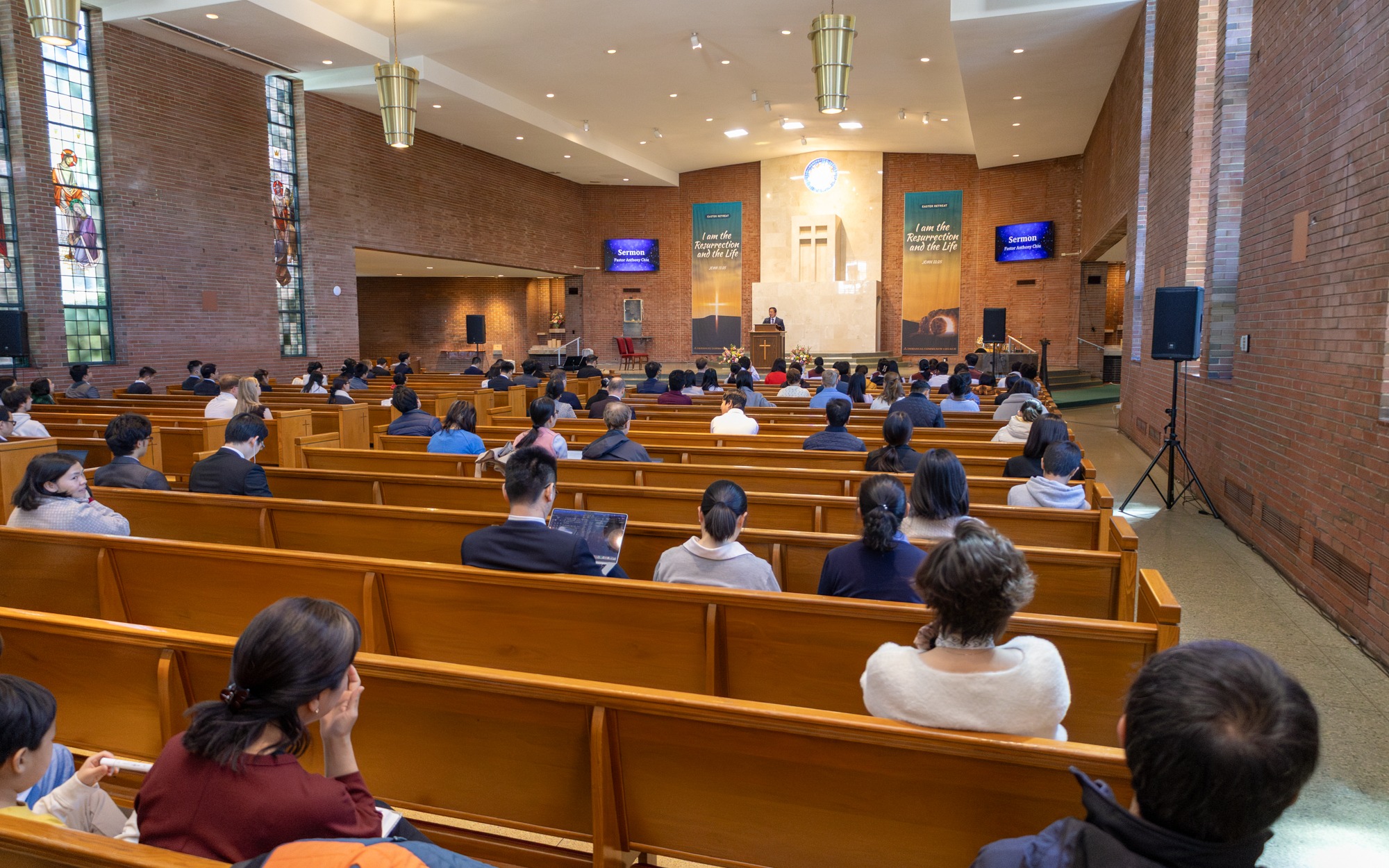
Sermon Manuscript
John 15:9–17
Jesus calls His disciples to abide in His love, love one another, and bear fruit that lasts.
Public Excerpt
As my Father has loved me, so I have loved you. Remain in my love. Greater love has no one than this: to lay down one’s life for one’s friends. This love transforms us so that we may bear fruit that lasts.
Greater love has no one than this: to lay down one’s life for one’s friends.
Greater Love has No One Than This (John 15:9-17)
This is the first Sunday of the new year. Throughout the Christmas season, we have continually reflected on the coming of Christ and the meaning of the love that descended to us from heaven. It is through this love that we are saved and made into new creations in the Lord. As we begin the year, it is fitting for us to establish the right footing by meditating further on how Christ’s love transforms us—so that we may discover our new identity in what the Lord has graciously given.
As my Father has Loved Me, So I have Loved You (John 15:9-11)
Where does love that its root? It is in God. When we look at the words of Jesus, he gives glory always to the Father as the source of everything. How did the Lord love us? He said he loved us just as the Father loved him. These few words embed a very deep world that has continued to mystify the world.
Today, the word “love” is used with striking frequency, especially in American culture. To tell someone that you love them has become commonplace, and nearly every form of media—movies, music, books—leans heavily on the theme. Love functions almost like a cultural shortcut, a reliable way to capture attention and stir emotion.
Yet this saturation reveals something deeper. What we speak of most often is often what we understand least. The constant invocation of love exposes not its abundance, but a profound hunger for it. Like thirst, longing grows louder when it goes unmet.
In this way, modern culture mirrors the path of Greek philosophy: insightful in analysis but ultimately circular. Love is examined, categorized, and debated, yet we are repeatedly returned to the starting point—still searching, still desiring, still unsure how love is actually found or sustained.
Amos 8:11-13
Amos speaks of a day when the words of the Lord would become exceedingly rare. In that time, young men and women—those in the prime of life, searching for truth and longing for love—would wander in desperation, their deepest thirsts left unquenched.
These words resonate powerfully with our present society. The growing surge of loneliness, broken relationships, and instability among friends and families bears witness to a profound lack—not of information, but of life-giving truth. If the answers are truly within reach, why do we find ourselves burdened with more questions than before? The famine Amos described is not merely physical, but spiritual—a hunger for the Word that alone can satisfy.
The Lord is telling us the answer lies in this: love comes from the Father. He did not give glory to himself about how much he loved us, but he gives the credit back to His Father who loved him exceedingly since eternity. To the Lord, there are no words that can truly describe this love he received. Often, how he shared it with us was through parables, using examples that we have on earth to draw a parallel to what that love is like. However, even this seems insufficient to the ones who are considered wise in this world.
1 Corinthians 1:21-23
What should be the wisdom of God is rather considered as foolishness to the wise from this world. This is the reality of what the apostles faced as they preached the gospel in a philosophical age. A lot of searching for the truth, but when the truth arrives, they considered it to be foolish instead.
The outpouring of love from the Lord—love that led Him to sacrifice Himself—seems at first to run counter to why people seek love at all. We long to be loved because we desire security and protection, not vulnerability or loss. We want love to shield us from anxiety, not expose us to suffering. Yet the Lord reveals that true love does the opposite: it empties itself and gives itself for the sake of others. How, then, could this be the very love we are seeking?
Rather than addressing this question in abstract or philosophical terms, the Lord answered it through lived reality. “The love of the Father is real,” He shows us, “because it is the same love by which I am loving you now.” This love was not demonstrated through words alone, but through action. Earlier in the Gospel of John, the apostle testifies that Jesus loved His own “to the very end” (John 13:1). Even as He stood on the brink of the cross, He wrapped a towel around His waist and washed His disciples’ feet. He comforted them with the promise that He would not leave them as orphans but would send the Holy Spirit to be with them.
In this way, the Lord made visible a truth that defies human expectation: the love of God cannot be confined, restrained, or extinguished—even by a death sentence. This is the depth and reality of the love the Son receives from the Father, and the same love He gives to us.
Love Each Other as I Have Loved You (John 15:12-14)
The Lord would show us the strength of this love through the cross itself. Even should death come knocking, there is the work of resurrection that could overcome it. There is no limit to what His love cannot achieve.
So, how will the world know that this love is true? It is when we love one another by the way He loves us. A new command has been given to us by the Lord that was non-existent when the commandments were first given. Moses tells us to love your God with all your heart and with all your soul, and to love your neighbor as yourself. We can only love others from the love that we know: how to love ourselves. However, the Lord’s command would include this: to love each other as I have loved you. This is a reactionary love that’s sourced not from what you have to offer, but what you have already received.
John 10:17-18
The love of the Lord is not affected by the circumstances surrounding Him, because He knows the authority the Father has given Him. Though He stands in the lowest position among men—led toward the cross where the worst sinners are crucified—He remains unwavering in His sense of worth. This is because He knows that the Father loves Him precisely for the path He has chosen to walk. His suffering does not diminish His identity; it confirms it.
Why, then, does anger so easily take hold of us? Though we long to experience love, we often encounter disappointment and confusion instead. We feel misunderstood, unloved, and jealous of what others seem to receive while we do not. This was the struggle Cain faced when God accepted Abel’s offering and not his. The anger Cain directed toward his brother—an anger that ultimately led to murder—revealed his deep distrust in God’s love. Did God abandon me? Did He choose my brother because I am worth less? Why am I placed lower, only to serve and suffer?
Before knowing the Word, all we possess are theories and imaginations. But through Scripture, we encounter the life of Jesus Christ, and through Him, we see how the eternal love of God is made visible and tangible. If we were to summarize the purpose of studying the Bible, it would be this: to know God and the depth of His love, so that we may make Him known.
This is why love is the central theme of the Christian faith. Salvation comes by faith—by trusting in the God who loves us so completely that even death cannot overcome His purpose. Knowing the love of God becomes the very source of strength that enables us to endure and overcome the trials of life.
Anger often acts as a defense mechanism, shielding our deepest vulnerability: our fear that we are not truly loved. At its root lies a distrust of love—both God’s love and the love of others. We long to be understood, and when that longing is unmet, we raise our voices even louder. Yet anger cannot heal a hollow heart. Only love can fill what is empty within us.
When we come to truly know God’s love—its unconditional nature and His unwavering faithfulness—we begin to find security in place of anxiety and fear. Emotional pain loses its grip, and clarity emerges, like the sun breaking through the fog. In knowing that we are loved, we finally find rest.
Suicidal thoughts ring a similar tune as well. Rather than directing that anger toward others, we direct that toward our creator, and the purpose of why we are created. This comes in the form of a test which Satan tempts with sweet words for us to doubt God’s faithfulness.
Matthew 4:5–6
Satan tells Jesus to throw Himself down, suggesting that this act would prove whether God truly cares—whether He would intervene and save Him from the fall. Yet the truth is that God’s love is not discovered through reckless testing, but through trust. What Satan offers is not assurance, but a path toward pain, isolation, and darkness.
The human condition often exists in a deep paradox. We push others away and express frustration that keeps people at a distance, fearing that if they come too close, we will only be disappointed by what we find. And yet, in that very isolation, we experience a profound loneliness—a longing for someone to come and draw us out of the darkness. The more we push others away, the more we secretly hope that someone would come and save us. Who, then, can reach us when we live this way?
The way forward begins with faith, rooted in the Word of God. This is how the Lord Himself overcomes Satan’s temptation.
Matthew 4:7
Jesus responds, “It is written,” refusing to test God and instead choosing to trust Him. We, too, must use the Word of God to confront temptation. To trust the Word means we seek God for our answers, rather than allowing Satan’s lies or our surging anger to define reality. When we believe that God has an answer for what troubles us, we begin to find a way out of the darkness we experience.
Galatians 6:2
Paul teaches that the fulfillment of the law is this: to carry one another’s burdens. This is love expressed at its fullest. At the deepest level, this is what we long for—that someone would carry our burdens, so that our loneliness and weary hearts might finally find rest. Yet Paul immediately follows this with another instruction.
Galatians 6:5
He calls each person to carry their own load. At first, this seems to contradict the call to bear one another’s burdens. If everyone can carry their own, why should we carry anyone else’s?
What Paul reveals is the nature of mature love. Mature love is not dependent or transactional. It is the ability to carry your own burdens while still taking responsibility for the burdens of others. This is not love as mere emotional support—loving others so that they will love us in return. It is love that begins unconditionally. Even when others feel heavy, inconvenient, or lacking, we choose to love them by carrying their burdens, their sins, and their weaknesses.
Luke 11:11–12
To help us understand how God responds to our prayers, Jesus points us to the love of a parent. No father would give his child a snake when the child asks for an egg. Even earthly parents, limited and imperfect as they are, respond to their children with care. How much more, then, will our heavenly Father respond in love to those who belong to Him?
For those who have children, this illustration resonates deeply. Parents often raise their children hoping that one day they will understand more, take initiative, and act out of love rather than mere obligation. Yet the reality is that children often respond only when commanded, almost like servants following orders. This can lead to frustration, especially when a parent longs for a relationship marked by trust, understanding, and willing obedience. In those moments, parents must learn patience—continuing to love unconditionally while waiting for the day their children finally grasp the heart behind their guidance.
Why does a parent love his or her child? Not because the child performs well or meets certain expectations, but simply because the child belongs to them. Nothing else is required. In the same way, God has called us to belong to Him. His love toward us is not conditional or transactional; it is rooted in the simple truth that we are His children, and He loves us as such.
I No Longer Call You Servants (John 15:15-17)
Before Christ, our relationship to God was often experienced as obedience to commands without understanding—like servants responding to a master. We were given the law and told to follow it, trusting that obedience would lead to life and blessing, even if we did not fully grasp the heart behind those commands. In that sense, our posture under the law resembled one of distance rather than intimacy.
This dynamic can be illustrated through The Lion King. When Mufasa warns Simba not to cross into the shadowy lands, Simba does not understand the reason behind the command. As the heir to the throne, he questions what could possibly stop him and becomes even more curious and rebellious precisely because the instruction lacks explanation. Rather than producing trust, the command provokes defiance. This reflects our condition under the law—obedience demanded without relational understanding.
Under Christ, however, everything changes. Jesus tells His disciples, “I no longer call you servants… Instead, I have called you friends” (John 15:15). Through Him, we are brought into clarity regarding the heart of God and the purpose of His will. We are no longer positioned as slaves who obey without understanding, but as children who know their Father and trust His intentions.
Galatians 4:1–7
Paul beautifully expands on this using the analogy of parenting. Though an heir is truly a child, Paul explains that before maturity the child lives no differently from a slave, placed under guardians and restrictions because of a lack of understanding. But when the fullness of time came, God sent His Son so that we might receive adoption. Now, our obedience is no longer the obedience of fear, but the obedience of sonship—marked by intimacy, as we cry out, “Abba, Father.”
When understanding is lacking, even children can misunderstand their parents. They may feel frustrated, distant, or distrustful. Yet God’s response toward us has always been patient and faithful. He loves us with the confidence that one day we will come to understand His heart. Because God loves us with such steadfast faith in us, we are invited to respond with faith in Him—trusting that He loves us in every circumstance.
My hope is that this year we would spend our time discovering this greatest love, growing in confidence as God’s children, and bearing the fruit of victory that comes from unwavering faith in this.
Respond to this message
Need prayer or want to visit us in person? We would be glad to connect with you.