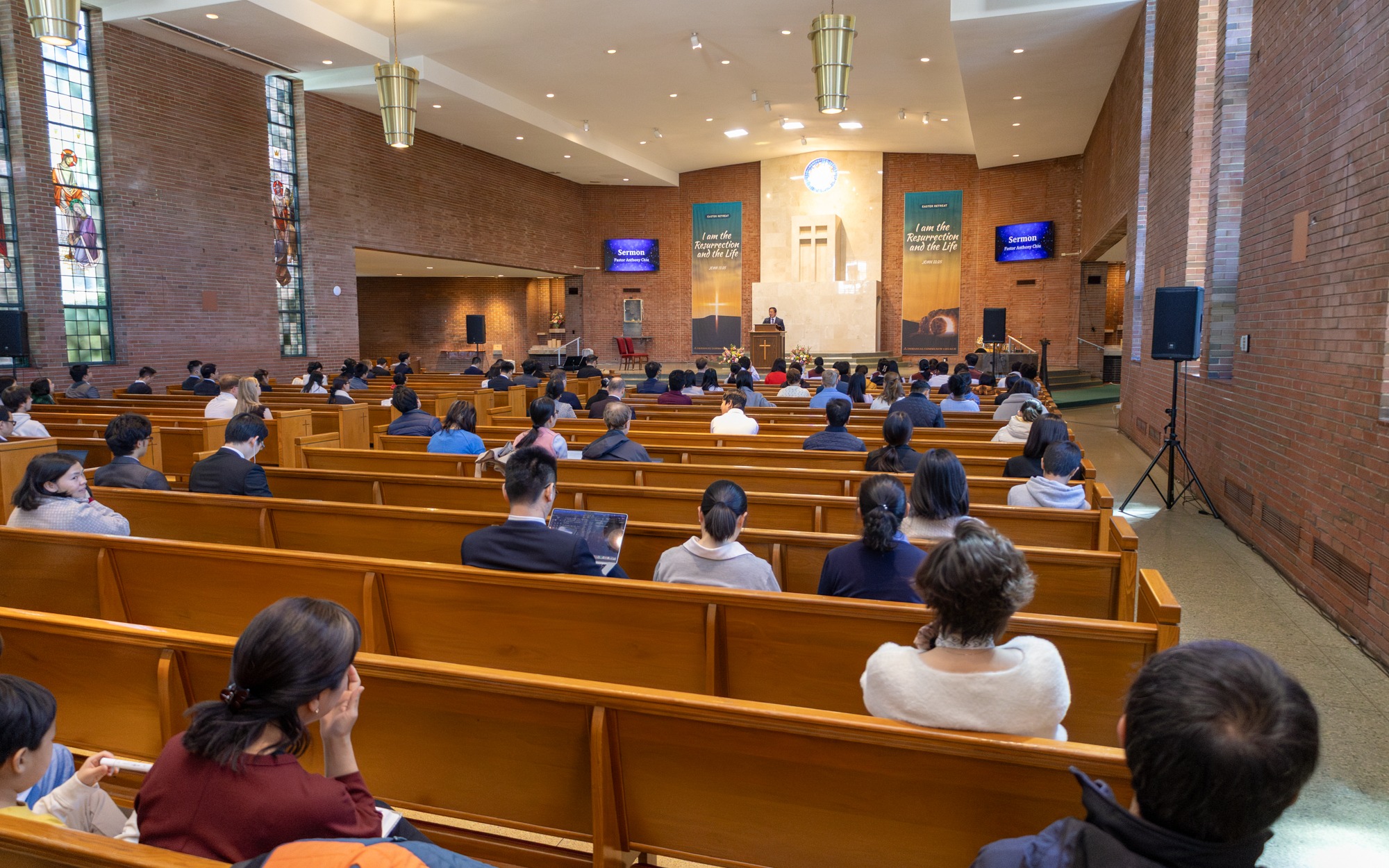
Sermon Manuscript
Psalm 121
A message of trust that lifts our eyes beyond our own strength to the Lord, the Maker of heaven and earth.
Public Excerpt
Our help does not come from our own strength, wisdom, or ability. Our help comes from the Lord, the Maker of heaven and earth. The one who watches over Israel will neither slumber nor sleep.
Our help does not come from our own strength, wisdom, or ability. Our help comes from the Lord, the Maker of heaven and earth.
I Lift Up My Eyes to the Mountains (Psalm 121:1–4)
The psalmist declares that he lifts his eyes to the mountains and asks: “Where does my help come from?” His conclusion is clear: “My help comes from the Lord, the Maker of heaven and earth.”
We must lift our eyes upward. That is where our help comes from. That is where blessing arrives.
Psalm 121:5–8
Do you believe the Lord watches over you—knowing all your tribulations and all your needs? If He is the One who watches over you, surely, He will not leave you unguarded. He will watch over your life and guide you through every trouble.
Matthew 10:29–31
“So do not be afraid; you are worth more than many sparrows.”
These words of comfort assure us that we are not left alone in the struggles of this world. Not even a sparrow falls to the ground apart from the Father’s will, though two are sold for a penny. And even the hair on your head are all counted—though you yourself do not know that number.
When do we fall into doubt and worry? It is when we lose sight of this truth—when we begin to believe that the Lord neither sees nor intervenes in our circumstances.
So how can we guard our hearts from falling into that state?
For this, I want to point us to the example of the great King David—one whose faith we should seek to emulate in this new year.
Because He Has Defied the Armies of the Living God (1 Samuel 17:32–37)
Israel entered this battle with a deep sense of despair. A great warrior named Goliath stood before them, intimidating the entire army. Then, out of the blue, a small shepherd boy stepped forward and volunteered for battle. To Saul, the scene made no sense.
“Who are you,” Saul might have thought, “that you consider yourself qualified to fight on behalf of Israel against a warrior feared even by my generals?”
From Saul’s perspective, this looked like reckless courage. Yet he had little choice—no one else was willing to stand and fight.
Have we ever faced a situation like this? We want to put up a fight, yet we lack the courage or confidence to finish it. We sometimes describe this as being caught “between a rock and a hard place.” No matter which way we turn, we see no path that leaves us unscathed. The army of Israel stood in exactly such a position.
If they retreated, they would be pursued, slaughtered, and driven from their homeland. If they fought, they feared certain death at the hands of this giant warrior. To Saul, there appeared to be no good decision.
David shattered that despair when he said to Saul, “I will go and fight Goliath.” Why? “Because the Lord who rescued me from the paw of the lion and the paw of the bear will rescue me from the hand of this Philistine.”
From the side of disbelief, this sounds like unfounded courage—trusting in One who seems unseen, leaving your fate in invisible hands. But from the side of faith, this was the very step Israel had missed from the beginning.
Should not the army of the Lord rely on the Lord? Should not the people of God depend on Him in their struggles and battles?
In Joshua 1:9, the Israelites were exhorted in a similar moment as they faced enemies their fathers could not overcome. What would be different now, after forty years of wandering, when those enemies still remained?
Joshua declared: “Be strong and courageous. Do not be afraid… for the Lord your God is with you wherever you go.”
To modern ears, Old Testament battles may sound distant—stories from an age before science and technological knowledge. Yet the principle is not confined to that era. Paul echoes the same faith in the New Testament.
In Romans 8:31 he writes, “If God is for us, who can be against us?”
Should this not be the most basic foundation of our faith?
Elsewhere, the Lord teaches that if someone builds a tower, he first counts the cost. If he cannot finish, others will mock him: “Why did you begin what you could not complete?”
But if the reason we began building was because of the Lord, would it not also be because of the Lord that we are able to finish?
If, halfway through, we forget this and begin to rely on something else, is this not why the structure becomes unstable? The materials no longer match. The tower rises unevenly—like a stack of Jenga pieces that cannot hold their weight.
Faith does not merely begin with God—it must continue with God, and it must finish with God.
I Cannot Go in These (1 Samuel 17:38–40)
Saul tells David to take his sword and armor. The gesture carries an assumption: David will need every possible advantage—even luck itself—to defeat Goliath.
But if Saul’s sword and armor were truly enough to defeat Goliath, why did Saul not go himself?
Here we see the paradox of unbelief. We find ourselves in situations where, no matter what we possess, it cannot solve the problem—yet we still feel unable to let go of those very things. Conventional wisdom tells us, “You cannot succeed without them.” And so we cling to what does not work, simply because it is familiar.
David broke that mold.
He tried on the armor, then said, “I cannot go in these.” They did not fit him—not merely physically, but spiritually.
His confidence to enter battle had never come from sword or armor. Why should he rely on them now, when that had never been the foundation of his courage?
So instead, carrying only a sling and a few stones, David went out prepared for battle.
This is the greatness of David’s faith.
How had God delivered him from the lion and the bear? Not by sword or armor. So why depend on them now?
Yet this story is not about method—as though God works only through slings and stones. David himself would later fight many battles as king using conventional weapons. The focus is not the tool, but the foundation.
Whatever method or instrument he carried, one formula remained constant: every method had to be grounded in faith.
Hebrews 11:29–30
These methods appear fantastical. Marching around walls? Crossing a sea on foot? And yet—they worked.
(Red Sea or Reed Sea debates aside, the spiritual truth remains unchanged.)
From a spiritual perspective, salvation can appear just as perplexing.
We may ask: “Just because I was immersed in water one day, how has my life truly changed? The days before baptism and after baptism feel the same. Perhaps I felt a brief surge of grace—but then life continued as usual.”
But by faith, you have already crossed the Red Sea—a point of no return.
Believing in Jesus and not believing makes all the difference.
Once, you relied only on yourself—or on those around you—for the help you needed. Now, you know there is a Lord and Savior who leads you into battle, One upon whom you can rely for victory.
The reason we sometimes fail to recognize the difference is that our focus returns to the “sword and armor” in our hands. Like Saul, we ask, “Why does the Lord not work through these?”
Yet the Lord might ask us in return: “Why must I only work through these?”
Relying on Him is not the same as relying on the wisdom the world teaches.
1 Corinthians 2:6–9
Paul writes that the God’s wisdom is different from human wisdom. And precisely because it is different, it is difficult for us to believe.
But if you are facing a situation the world cannot solve—would it not require a solution beyond what the world can offer?
The resurrection of the Lord is not something the rulers of this age possess. So why do we look to their methods to secure our resurrection hope?
Faith calls us, like David, to lay aside what does not belong to us— and to walk forward with what God Himself has placed in our hands.
The Battle Belongs to the Lord (1 Samuel 17:45–47)
David leaves us with these famous and powerful words: “The battle belongs to the Lord.”
He declares to Goliath, “You come against me with sword and spear and javelin, but I come against you in the name of the Lord Almighty.” Invoking the name of the Lord was, for David, more than enough to face the armies of the Philistines.
This is the remarkable faith that turned the tide of what seemed like an impossible battle. It was this faith that propelled David toward his destined kingship over Israel. David showed us that his authority did not come merely from the anointing of men, but from the anointing of the Spirit of the Lord—an anointing unmatched by anything in this world.
The wisdom David depended on was never merely human; it was always otherworldly—rooted in his relationship with God.
In Proverbs 9:10–12, Solomon reveals the source of such wisdom: “The fear of the Lord is the beginning of wisdom.” Rather than fearing men, fearing the Lord carries eternal weight.
This fear is not one that drives us into terror or causes us to shrink back. Rather, it is a holy awe—a reverence that causes our hearts to bow in humility before His surpassing greatness. It is a wisdom that often escapes us. Yet once we recognize that we have always had access to it, and once we begin to see the wonder of how His wisdom works, we cannot help but stand in awe—wondering why we did not look to Him sooner.
Scripture also tells us in 2 Peter 3:3–4 that in the last days there will be scoffers who follow their own evil desires, asking, “Where is this ‘coming’ He promised?”
The world questions where the miracles of God are. It looks at history and says everything is predictable, explainable, and subject to human analysis.
Yet those who place their faith in the Lord draw from a source that exceeds all expectations and calculations. They possess a wisdom and a courage the world cannot understand—the wisdom of knowing that the Lord is at work, even when human eyes cannot see it.
And it is this faith that allows believers, like David, to stand before giants without fear—because they know the battle does not belong to them, but to the Lord.
Fixing Our Eyes on Jesus (Hebrews 12:2–3)
What allows us not to lose our focus—what keeps our faith from wavering? It is this: we must fix our eyes on Jesus.
So often, we suffer from a kind of spiritual blindness. We struggle because we cannot clearly see where we are being led. The most important function of the eye is to guide us before we take the next step—to assure us that what lies ahead is solid ground and not the edge of a cliff.
But what happens if our eyes are fixed on something else instead of the path we are meant to walk?
We will surely miss what we should never have missed.
Isn’t it true? It’s like missing an exit on the highway that you were supposed to take. At first, you may not even realize it. But once you do, you find yourself miles away, forced to make a long U-turn—wasting time and energy just to return to where you should have turned.
Matthew 6:22–23
The Lord said that the eye is the lamp of the body. Where your eyes lead, your body will follow. If our eyes and our focus shift elsewhere, then we too will be led down the wrong path. Isn’t it, then, so important to guard our eyes?
If we do not, we may miss the very point where we were meant to turn. We end up taking detours and U-turns in life—only later realizing that what we were searching for had been before us from the beginning.
Revelation 4:6–8
John describes heavenly creatures whose bodies are covered with eyes, all fixed upon the Lord. This imagery points to spiritual worship—heavenly beings worshiping God with their entire being, their focus completely aligned with where their eyes are directed: toward Him alone.
Romans 12:1–2
Paul echoes this same truth. He tells us that what the Lord desires is not sacrifice offered merely out of ritual or formality, but spiritual worship. Our whole body is to be presented as a living sacrifice.
When every part of our being is focused on Him—when our eyes, our minds, our hearts, and our lives are all directed toward Him—that is when transformation happens. That is when renewal begins.
So in this new year, I hope we may be people who lift our eyes to the mountains and discover where our help truly comes from.
Our help comes from the Lord—the Maker of heaven and earth.
And I pray that we may be those who receive the many blessings the Lord desires to pour out in this year ahead.
Respond to this message
Need prayer or want to visit us in person? We would be glad to connect with you.